

Doomsday book 1086
The traditional view is that Kirkheaton began life as ‘he ton’ or ‘heaton’, which comes from two Olde English words ‘heah’, meaning high and ‘tun’, a settlement or farm, to give the translation of the ‘dweller at the high farm’.
However, the first historical reference to the settlement which would become Kirkheaton is actually ‘Heptone’ (Hepton in modern English) in the Domesday Book of 1086. ‘Heope’ or ‘Heopa’ in Old English means brambles or rosehips to give the farm where the brambles grow. In Norman times Hepton would have been little more than a hamlet. The Domesday Book records two brothers living there in 1066.
Where this settlement was remains a mystery although it was almost certainly on high ground. It may have been at Upper Heaton or on Cockley Hill where medieval remains have been found. As to the disappearance of the name Hepton that may have come about when the de Heton family became one of the major landowners in the village in the late twelfth or early thirteenth centuries. Places were often named after the families that owned them and this was certainly the case with the de Hetons. Besides land in (Kirk)Heaton they also owned land in Westheaton and Eastheaton (modern day Hanging Heaton) in Dewsbury.
Many surnames originate from placenames. Although Hepton no longer exists as a place the name still survives as a surname, e.g., the footballer Stan Hepton played for Huddersfield Town in the 1950s. Perhaps the old village name of Hepton did survive for some time.
JLL
Tags for this article:
Recent Archive Posts

Dalton Grange
Dalton Grange, the house, or rather mansion, was built in 1870 by a Henry Brooke, at that time head of the firm of J. H. Brooke...
Tolson Farmers of Dalton, Kirkheaton and Houses Hill
The Tolson`s seem to have been farming in and around Kirkheaton for quite some time, and in the early 20 century were spread...
The Coalman who went to war
The Story of First World war veteran Frank Stancliffe MM The Kirkheaton History Group has carried out a great deal of research...
Kirkheaton St Johns’ Infant School
Kirkheaton St Johns’ Infant School, Fields Rise Memories of Margaret Waddington Aged 86 I first began at the infant school in...
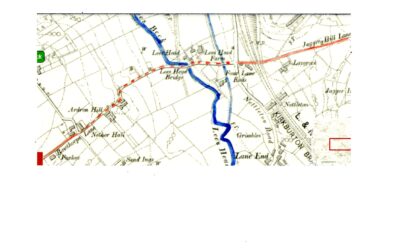
Rawthorpe Lane and the lost hamlet of Lees head, Dalton
6" OS map CCXLVII.16 published 1908 Courtesy of the National Library of Scotland Before 1915 Jagger lane, Kirkheaton;...

Lepton-Lodge Mill Colliery
6 “Ordnance Survey map CCXLVII.SW revised 1948. Courtesy of The National Library of Scotland, showing the location of...
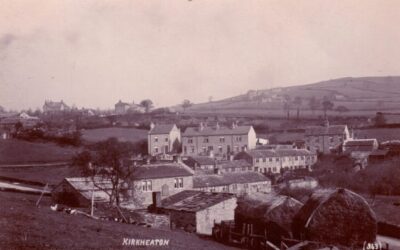
Kirkheaton-Brown Cow Inn
Kirkheaton History-by Geoff Newell My story is of the Hirst family who lived and ran the Inn known as the Brown Cow, which used...
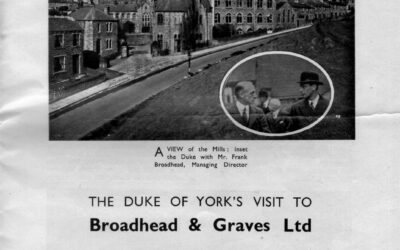
Broadhead and Graves Mill Royal Visit 1932
His Royal Highness, the Duke of York, as President of the industrial Society, visited the Kirkheaton mills of Broadhead and...
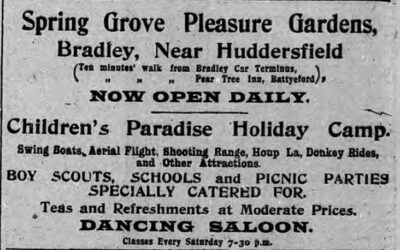
Colne Bridge-Spring Grove Pleasure Gardens
Spring Grove Pleasure Gardens on Paul Lane, Colnebridge (Approximate WhatsApp location "remit.inches.voter") operated between...

Kirkheaton Brickmaking in the 18th Century
Brickmaking has been well established in Birstall Parish for over 50 years, and other sources of good earth in townships such as...
Kirkheaton Cricket Club History
DEVELOPMENT OF THE CLUB Our centenary year celebrates 100 years on this ground at Bankfield. However...
Grange moor-Hit by VI Rocket Christmas Eve 1944
This week Grange Moor, like other places has celebrated VE-day and VE-plus-one-day. During the celebrations the thoughts of the...

