
6 “Ordnance Survey map CCXLVII.SW revised 1948. Courtesy of The National Library of Scotland, showing the location of Lodge Mill Colliery [1] and tramway to Spa Green Brickworks.
The corresponding 25 inch map of 1893 (surveyed 1888) does not show the colliery which began around 1892 yet from 1892 to the 1920’s there are many newspapers reports covering unrest between the owners Benjamin Elliot and his workers.
In 1906 Mr Elliot laid plans before Lepton Board [2] to run a tramway under Wakefield Road to his brickworks at Spa Green, Fenay Bridge which would connect to the overhead flight from the colliery. The coal tubs went underground near the chimney at chimney lane (The chimney previously ventilated one of the two Cowmes collieries in this area) [3]).
Sadly there were a number of serious accidents at the colliery
In January 1913 2 men were killed by gassing and roof collapse [reported in the Yorkshire Post 29th January 1913.] and shown below.
GALLANT RESCUE WORK. An alarming accident, attended, unfortunately, with fatal results occurred early yesterday morning at Lodge Mill Colliery, Lepton near Huddersfield. Alfred Sykes, dataller [4] of Houses Hill, Kirkheaton, lost his life, and two other men, James English, the deputy, of Hopton, and Albert Schofield, dataller of Leeds Rd Huddersfield, narrowly escaped a similar fate. The night shift were about to cease work, when it was discovered that English had not returned from a disused working, and it transpired that had he been overcome gas. Sykes and Schofield, who went his assistance, were similarly overcome, and a second rescue party was organised by the manager, Mr. C. H. Hinchliffe and Mr. George Elliott, son of the proprietor. In the meantime a heavy fall of roof had occurred, and although digging operations were immediately commenced, progress was slow. Lamps could not be used and the road was very low and the working was fully one mile away from the pit head. The rescuers worked hard, however, and were urged on by occasionally hearing faint groans from the other side of the debris. At dinner-time, six hour- after the last two of the entombed men entered, the pit rescue team arrived from Altofts colliery, equipped with the * WEG* apparatus. Shortly afterwards Schofield and English were found, and although they were scarcely breathing, they revived somewhat under the attention of Dr.Tait of Lepton, who had descended the pit some time before. Later Sykes was rescued, but he was found to be dead. Schofield and English were removed to the Huddersfield Royal Infirmary, where they lie in a critical state. The pit is run conjointly with Throstle Nest Pit, and both have been singularly free from fatalities since they were opened 20 years ago. The first fatality occurred at Throstle Head Pit on the 11th of January, when a hurrier was killed. The Lodge Mill Pit gives employment to about 39 men.
Further detail emerges when the inquest was reported in the Yorkshire Post on 3rd February 1913
In 1914 a Joseph Laycock of Hopton was killed and In 1920 two men were severely burnt by an explosion.
George Redmond states that the colliery closed in 1931 so it is a mystery why the flightway is still shown on the 1948 map. When Kirkheaton Brickworks closed in later years there was a plan to transport clay from their clay pit to Spa Bottom by an overhead flight, but this never materialised.
Footnotes
[1] Origin of the name Lodge Mill.
Lodge Mill farm was the site of the former Whitley manorial corn mill first documented in 1487 ” A mill held by William Swallow in Whitley. 70 years later a court roll describes the corn mill belonging to a Richard Lodge. After that it was known as Lodge Mill and later used to name the farm and later Lodge Mill colliery. Extracted from Discovering Old Huddersfield 1993-2002 by Gordon and Enid Minter- Courtesy Huddersfield Exposed.
[2] Huddersfield Examiner 14 Dec 1906
LEPTON LOCAL BOARD
Mr. Elliott sent a plan of a tramway or carve road which he proposed to make from his colliery at Lodge Mill underneath the highways at Botany Lane and Thurgary Lane to Wakefield main road. —lt was resolved that the plan be referred to the Highways Committee, and that Mr. Elliott be requested to attend the next meeting of the committee, and produce sections showing the proposed depth of the tramway and details of the arching under the highways, and to explain how he proposes to deal with the tramway under Wakefield Road. —The clerk and the engineers (Messrs. Brook, Mansfield and Dyson) were instructed to attend the meeting of the Highways Committee, and it was decided to request Mr. Elliott to forward the sections a few days previous to the meeting.
At the meeting of Lepton Board in 1907 the plans were passed-Huddersfield examiner 15 Feb 1907
[3] Redmonds, GR; A Huddersfield Miscellany; GR Books 2022
[4] Dataller-is an obsolete term for a worker paid by the hour

Lodge Mill colliery
Tags for this article:
Recent Archive Posts

Dalton Grange
Dalton Grange, the house, or rather mansion, was built in 1870 by a Henry Brooke, at that time head of the firm of J. H. Brooke...
Tolson Farmers of Dalton, Kirkheaton and Houses Hill
The Tolson`s seem to have been farming in and around Kirkheaton for quite some time, and in the early 20 century were spread...
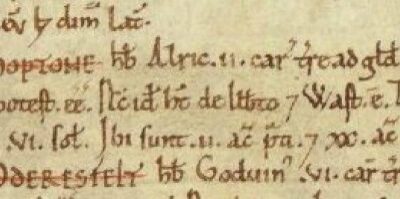
When Kirkheaton was known as Hepton (Heptone)
Doomsday book 1086 The traditional view is that Kirkheaton began life as ‘he ton’ or ‘heaton’, which comes from two Olde English...
The Coalman who went to war
The Story of First World war veteran Frank Stancliffe MM The Kirkheaton History Group has carried out a great deal of research...
Kirkheaton St Johns’ Infant School
Kirkheaton St Johns’ Infant School, Fields Rise Memories of Margaret Waddington Aged 86 I first began at the infant school in...
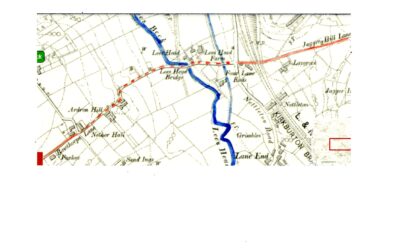
Rawthorpe Lane and the lost hamlet of Lees head, Dalton
6" OS map CCXLVII.16 published 1908 Courtesy of the National Library of Scotland Before 1915 Jagger lane, Kirkheaton;...
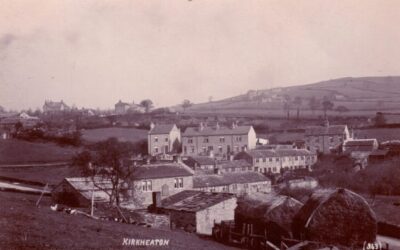
Kirkheaton-Brown Cow Inn
Kirkheaton History-by Geoff Newell My story is of the Hirst family who lived and ran the Inn known as the Brown Cow, which used...
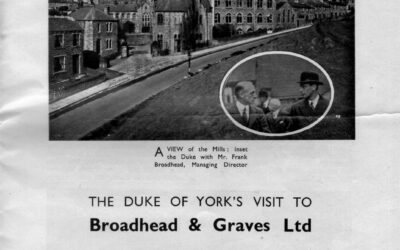
Broadhead and Graves Mill Royal Visit 1932
His Royal Highness, the Duke of York, as President of the industrial Society, visited the Kirkheaton mills of Broadhead and...
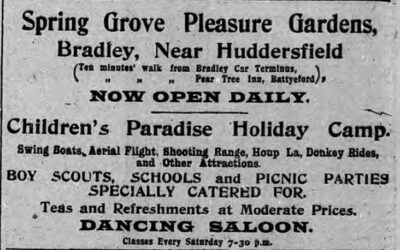
Colne Bridge-Spring Grove Pleasure Gardens
Spring Grove Pleasure Gardens on Paul Lane, Colnebridge (Approximate WhatsApp location "remit.inches.voter") operated between...

Kirkheaton Brickmaking in the 18th Century
Brickmaking has been well established in Birstall Parish for over 50 years, and other sources of good earth in townships such as...
Kirkheaton Cricket Club History
DEVELOPMENT OF THE CLUB Our centenary year celebrates 100 years on this ground at Bankfield. However...
Grange moor-Hit by VI Rocket Christmas Eve 1944
This week Grange Moor, like other places has celebrated VE-day and VE-plus-one-day. During the celebrations the thoughts of the...

