
Alexander Graham Bell, the inventor of the telephone, made the first telephone call in March 1876 to his assistant Thomas Watson who was just 100 feet away. The following year the first telephones were installed in Britain after Bell stayed with the Bayly family at Torr House near Plymouth. He gifted the family two phones in gratitude with one being installed in the main house and the other in the lodge where the gardener lived. In 1878 Bell demonstrated his telephone to Queen Victoria who was quite taken with it. Speaking from Osborne House on the Isle of Wight the Queen was able to make calls to Cowes, Southampton, and even London. These demonstration calls were the first long distance ones in Europe. In 1879 the first telephone exchange opened in London. It served just 200 customers each of whom was charged £20 a year for a service limited to the London area. Calls between towns and cities were not possible until the first trunk line linked Leeds and Bradford in January 1881. With only 13,000 telephones in the country in 1884 public call offices were introduced. Widely advertised in the press these public telephones, the forerunner of modern telephone boxes, were housed in ‘silence cabinets’ in shops, railway stations and other public places. One of the first was installed in Bristol and was basically a small wooden hut or kiosk. A three-minute call cost 2d and the money was paid to an attendant or sometimes placed in a slot mechanism in the door. The number of telephone calls being made now rose sharply from 33 million in 1885 to 50 million the following year.
These developments were not lost on the forward-thinking businessmen and civic leaders of Huddersfield. In fact, they were amongst the first in Britain to realise the potential of the new technology. When the National Telephone Company obtained permission in 1881 to build a telephone exchange in Cloth Hall Street Huddersfield, they took full advantage. Hefford Ainley, the owner of Shop Lane Mills, was amongst them and became the first person to have a phone installed in Kirkheaton. He had one installed in his mill and another in the company’s office at Byram Court in town. In the 1888 Huddersfield phone directory his telephone numbers 57 (Byram Court) and 71 (Shop Lane Mills) were the first two listed in the book. At the time only 10 of the 96 numbers listed in the directory were private homes, most of the rest being for local businesses. The number for the police and fire brigade was 38, whilst for the Huddersfield Infirmary it was 46. There was only one public telephone and that was at the National Telephone Company’s offices in John William Street.

Hefford Ainley’s telephones would have both been wall mounted. To make a call he would have first had to contact the telephone exchange so that the operator could put him through to the number he wanted to reach. This involved cranking a handle on his telephone. This rang a bell as he did so and at the same time alerted the operator that he wanted to make a call. He would have then waited for the operator’s answering signal – this made the bell on his phone ring again. Once he heard that he could pick up the earpiece and speak to the operator through the ‘transmitter’ (mouthpiece), who would then connect him to the number he wanted to reach. Once the call was completed the earpiece was replaced and the crank turned again to tell the operator to disconnect. The telegraph poles carrying his telephone line may well have led to Kirkheaton Station. This was because the early telephone companies often took advantage of the existing telegraph system used by railway companies and used their telegraph poles to carry their own telephone lines.
There is no doubt that the telephone would have given Hefford Ainley an edge over his competitors and help him drum up business at home and eventually abroad. In time he had customers as far afield as New York and Paris. After 1891 some of his dealings with his French business partners may well have been conducted over the telephone. In that year a subsea telephone cable was laid across the English Channel. Hefford Ainley was very much ahead of his time. The first record of a public telephone in Kirkheaton is not until 1909 over twenty years after the one installed in Shop Lane Mills. The Huddersfield telephone directory for that year shows that Edward Greenwood had one in his post office on School Lane. By 1917 there was a telephone call office at Edward Pexton’s sub post office at the Town road/ New road junction. In 1930 the first boxes were installed, one at Upperheaton and one at the bottom of Heaton Moor road
JLL March 2024
Sources
1.The National Telephone Company’s Directories: Huddersfield Area (January 1888 to January 1909) on the Huddersfield Exposed website
2.Plymouth Live website
3.The Science Museum in London
4.UK Telephone History (incorporating the British Telecom Archives) website
Tags for this article:
Recent Archive Posts
Old Kirk Stile-Kirkheaton
OLD KIRK STILE- A visit recorded on July 30th 1887 Few are surely unacquainted with the renowned...
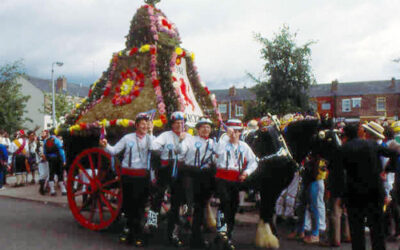
Rushbearing
Rush Bearing As with most churches in the 14th and 15th Century, Kirkheaton St Johns church had no seats for the...
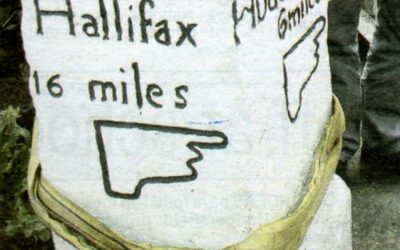
Kirkheaton Guide Stoop
The Kirkheaton Guide Post The guidepost (Milepost) at the crossroads of Hollin Hall lane and Highgate lane is notable for its...
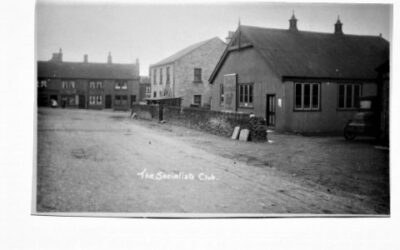
Kirkheaton Labour Club
Kirkheaton Labour ClubWas formed in 1914 at New Road, Kirkheaton next to Stocks’ motor garage. “What 3 words”...
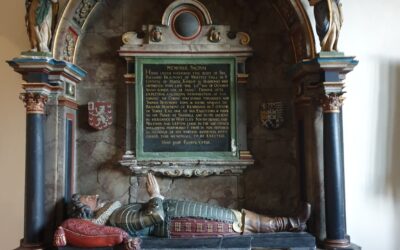
SIR RICHARD HENRY BEAUMONT 1574-1631
He was nicknamed Black Dick of the North by James 1st (formerly James VIth of Scotland). He was knighted in 1609 standing as MP...
Kirkheaton Colour Works-Gawthorpe Green
The first reference to John Dawson as owner of Kirkheaton Colour works is in 1889 [1] with reference to patents he took out...
Beaumont Arms (Kirkstile) Water Supply
Sept 1st 1858 I beg to acknowledge the receipt of your letter respecting Mr Beaumonts tank of water which is situated in the...

